
Photographing the Garden
Kristi the demon camerawoman was just complaining about it yesterday, so I know I’m not alone when I say
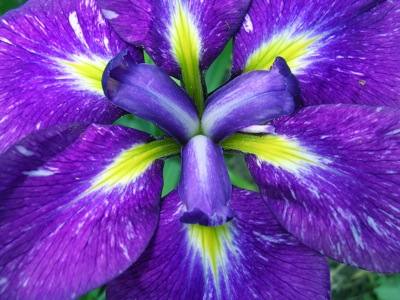
closeups are easy.

and mugshots present few problems

while landscapes are difficult

And anything in the middle is just about impossible
Yet the urge to photograph persists, along with the urge to get back to gardening and not be endlessly messing around with the equipment. As far as I can tell, the hardest thing to get into your head is the miracle of human sight. Cameras don’t see what people see.
Where even a persnickety viewer registers mostly ” that’s gorgeous,” in the face of something like a humongous clump of healthy foxgloves, the camera records ragged leaves with holes in them, spent blossoms, teeny tiny weeds at the base where the mulch has been pulled away…
So the less stuff there is in the photograph, the easier it is to avoid inadvertent confessions ( the composition problem is another story).
Digital cameras make it easy to shoot the thing, view it, then clean up as necessary, but they don’t make any extra time to do the cleaning when you’d rather be doing something more productive – like picking raspberries, for instance, or thinning lettuce, or getting the last peonies deadheaded before they waste too much energy making seeds.
So whenever I’m torn between photo improvement and actually gardening, I just remember the time Toshi Otsuki came to shoot the white garden for Victoria magazine.
Before he took a single picture, he spent a full day on giving the place a manicure. I’d come out from time to time see if he needed anything and there he’d be with his tiny scissors, snip, snip, snip.
He deadheaded every single wilted cosmos blossom; gently pulled the spent petals from a whole herd of nicotianas, delicately removed imperfect rose leaves … a tour de force of tidying that still gives me the willies whenever I think of it, even though the results were admittedly a romantic dream.
The inspiring part is what he did NOT do, which was to use any fancy equipment: no big lights, no special reflectors, not even a tripod. He just wandered around with his (smallish) camera, shooting multitudes of pictures for later editing.
Ever since, I’ve taken my cue from that part of his fabulous attention. The most important thing in garden photography is simply Being There, and in that we all have a huge leg up on even the most skillful ( and well-equipped) pro.
That said, I have found a few tips from Garden Photo 101 (the bedrock standard advice) to be especially helpful:
* Best shooting times are morning and evening when light is soft and shadows ditto. The bright sun of mid day bleaches colors, flattens the picture plane and casts harsh shadows.
* Strong contrasts like white flowers on a deep green philadelphus or pale pink blooms on a dark leafed begonia are frequently too much for the autopixies, which tend to choose the dark background and open the lens, thus making mush of the lighter items. Locking the autofocus on a pale part can sometimes help.
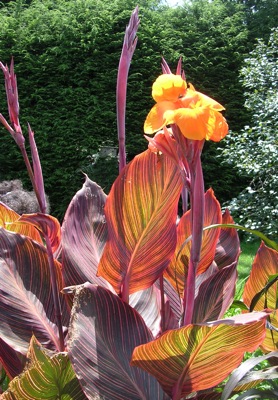
* Backlighting makes colors pop and often produces dramatic effects, but the camera can’t adjust for direct brightness elsewhere in the picture. There would be a lot more detail in the canna flower if I had used a fill flash but then there we are with the slaves ( flash attachments that are not part of the camera body) and other stuff I can’t bear to tote around.
Time for another round of ” when in doubt, closeup saves the day.”


Share this





gorgeous photo of the purple iris—thanks
You’re welcome – but all thanks go to the iris; just get in its face and you can’t miss.
Wow! This is such a thing for me, I spend so much time photographing my garden that my neighbors think I am nuts and when I get the photos back (yeah, old school 35mm), I realize half the time I am. I try the AM/PM thing and have reasonable success, perhaps the being present and really looking (and closely grooming!) is yet another skill to master. I am getting better, and I know my garden is getting better as a result yet I am still drawn to answers and assistance. I love your blog so far, I just came across it the other day and am happily wandering thru as time permits. Thank you for sharing!!!
Welcome, Christine
Great to hear from a fellow photo-addict, especially one from the old school.
A lot of pros feel nothing replaces film, not even fancy expensive digital SLR’s. And I have a friend who teaches photography who insists the high cost of film and developing is actually a good thing, since it forces you to think about what you’re doing before you do it.
But as an impulsive (and lazy) photographer I confess I adore digital, including my fairly low end and now antiquated – 3 years old! – Nikon. At least for me, the freedom to shoot and shoot and shoot has been hugely liberating. What with the light changing constantly and pesky breezes coming out of nowhere, taking 20 pictures of exactly the same thing really improves the odds of getting something good.
Delighted to hear you’re enjoying the blog. Please keep visiting – and being part of the commenting community.
I found your blog while “googling” Toshi Otsuki. I enjoyed reading about your experience watching him prepare and shoot your garden. I would love to hear more about him. If you have posted previously, can you direct me to that post? If not…would you consider doing a post just about his visit? Thank you so much for your consideration!
Welcome, Christy –
This is the only post that mentions Toshi Otsuki; if there were more the search box on the right at the top would have taken you there.
And I’m afraid the visit was so long ago I don’t remember much beyond what I’ve already written. For what it’s worth:
He arrived shortly before dusk the day before the shoot. It should have been in the afternoon, for scouting, but because we had a humongous fog that day he got royally lost. “Long ago” = “no cellphones” and the Maine garden’s way out in the country.
Once on the premises he went right to work, walking around looking until it was too dark to see. I gave him a very brief tour to start, then left him on his own. We invited him to dinner but he declined – he MAY have accepted some tea and a snack but I wouldn’t swear. Then off he went to his motel about a half hour away, explaining he would be back very early in the morning.
which he was, even though it was still pea soup. Again, if I’m remembering right I found him out there hard at work when I got up at about 6:30.
After that there’s not much more than the story above. He left at the end of the day, this time I THINK after accepting tea ( also think he never ate lunch unless he snacked on something he’d brought along). All this makes him sound sort of standoffish, which he most emphatically wasn’t. He was charming and friendly and all-around nice, just utterly focussed on the job at hand.
The pictures in Victoria were lovely and no doubt there were others far lovelier that didn’t fit the layout – he shot about a zillion rolls. But I don’t know that my memory of the whole thing would be as strong if it weren’t for the fact that there’d been another shoot just a week earlier, for a different magazine with a somewhat different agenda.
That photographer did a fine job. So did his assistant, their gofer and the two set-designers who ran around rearranging my small collection of furniture and decor. All the actual plant tidying was done by me before they came. ( I tidied pre-Toshi, too, but of course that turned out to be orders of magnitude not enough.)