Ornamental millet ‘Limelight', in a bed with peppers (at right) and Verbena bonariensis. That's the tomato patch in the background.
Not long ago, I found and wrote a brief post about an amazing millet bug – amazing in that it was huge, gorgeous, and something I’d never seen before.
I was hoping somebody would recognize it. So far no luck. Also, at least so far, no one who shares my appreciation of its beauty. Commenters have been silent, but e-mails and conversations with friends have reminded me that for many people, bug = disgusting.
Too bad. Some insects are just plain creepy – earwigs come at once to mind – but a lot of them are drop down gorgeous, however disgusting their behavior.
Read More…
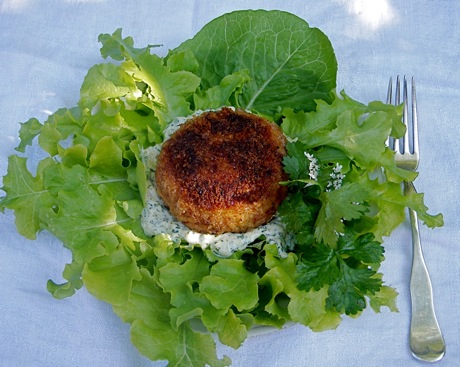
Maine crab and lobster mushrooms inside that crunchy crust
At the risk of jinxing things I have to say this is shaping up as a boffo mushroom year (in Midcoast Maine, anyway.) We haven’t had much chance to go out, but when we do we are finding things, including lobster mushrooms, which seem to be unusually abundant.
I am of the school that feels they get their name from their brilliant color. To me, the flavor is meaty, not fishy. But others claim they also taste faintly crustaceanlike. This isn’t as farfetched as it sounds; mushroom cell walls are primarily composed of chitin, the same material that makes crab and lobster shells.
Either way, they have a great affinity for Maine crabmeat, one of the world’s greatest seafoods.

Those bright red bits are the mushroom
Read More…
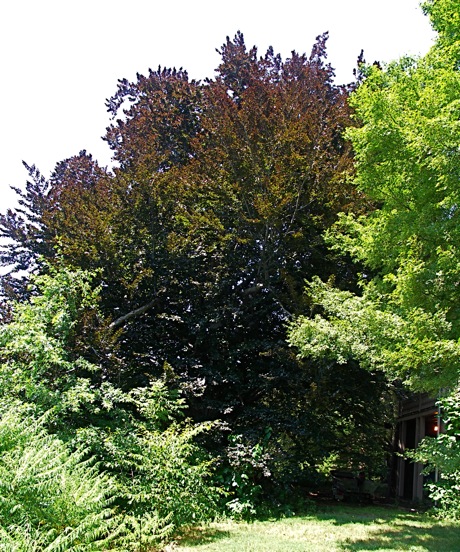
One of the copper beeches at Yale, showing the classic bronze-red color and classic full crown.
One of the great things about having Eric with us is that his pet plants are not usually the same as my pet plants, so we all get a different viewpoint (and set of growing hints). But this time around he’s making love to one of my favorite trees.
One of my favorite tree genera, actually, since I don’t think I ever met a beech I didn’t like.
Read More…
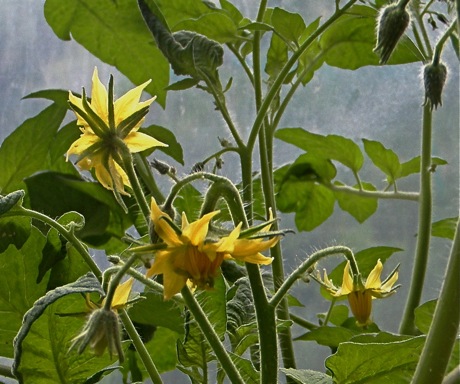
Will these Brandywine blossoms make it to tomatohood if the weather stays hot hot hot?
Our friend Melinda writes:
“It’s been my understanding that when it’s too hot for a sustained period (including high overnight temps–like around 80), that many veggie plants drop their flowers before they fruit (e.g., tomatoes, peppers, squash, etc.). Is that true in your experience?”
Yes, but less often than you might think – or fear, given the ongoing heat wave. High night temperatures sterilize pollen and flowers that are not pollinated fall from the plant. But the window for this kind of blossom drop is comparatively narrow.
Pollen forms before the flower opens, but not that long before, and after the flower opens it must be pollinated within a day or two (over the course of a single morning, in the case of squash), no matter what else is going on.
Read More…
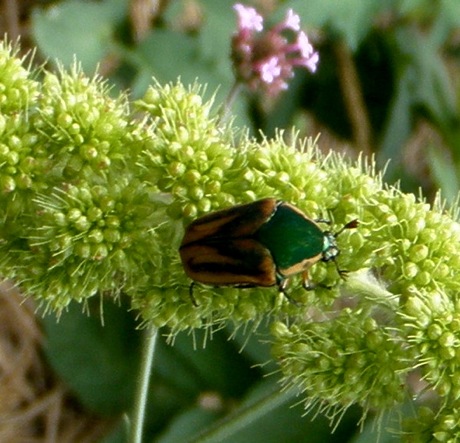
The iridescent green of the head is also in stripes at the joints, so the side view shows a string of jeweled beads
Anybody recognize this creature on the Limelight millet?
First pass at google confirms the likelihood that it is as it appears to be, some kind of stinkbug; they seem to be major pests on millet. But none of the common green and brown ones are anywhere near this large – it’s about an inch long.
Dial “M” for millet, right? It was the only one I saw but I fear it has friends and relatives nearby.
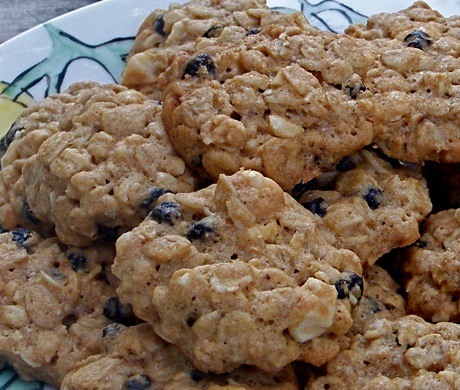
The picnic classic, downeast edition
Usually, when I give a party, I prepare the food. But at our recent garden soiree for the Maine Farmland Trust, these cookies were my only contribution. (Food luminary Nancy Jenkins, an ardent Trust supporter, did all the rest, leaving me free to obsess about weeding.)
Because we wanted to showcase raw materials that come – or could come – from Maine, the cookies were made from Maine-grown oats. Local eggs. Butter was my regular butter, Kate’s. The blueberries… well, of course…

The upper path is empty of people because everyone kept on going (the party was in the lower garden).
Read More…

Deep red is a magnet for the eye, says Eric, and the deep red climber called Dublin Bay is also a magnet for the nose. (Those dark edges come with maturity; they're not visible on younger flowers.)
One problem with going on vacation is that you’re not there to photograph your favorite rose when it’s at its peak, but that hasn’t stopped our friend Eric from resuming his series on pet plants with a shout-out to Dublin Bay, a real landscape workhorse: long blooming, trouble free and (unlike most low-maintenance roses) delightfully fragrant.
Read More…
FGFP stands for Food Gardeners Fine Points and I’m putting pea varieties there because a recent NPR story, Why Supertasters Can’t Get Enough Salt, implied supertasters were the only ones who could taste differences between peas.
Phooey. If you’re any kind of taster at all, you know instantly when snap peas are too young or pod peas are over the hill. And if peas were sold by name, like tomatoes, you’d have little trouble noticing that different varieties have distinct degrees and kinds of sweetness, more and less tenderness, juiciness, grassiness…
And then the words start failing. I can say things like “Early Perfection has a slightly spicy note,” or “Casselode has old fashioned pea flavor with faint echoes of field peas.” But vegetable-speak has a long way to go before it’s as useful as wine-speak. I’m working on helping the produce catch up, so if you have good ways to describe the many, many tastes of peas, please write and let us know.
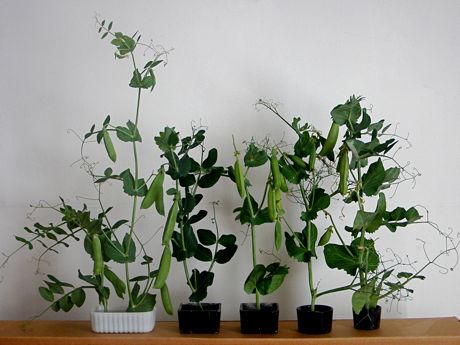
- Left to right: Early Perfection, Laxton’s Progress #9, Casselode, Sugar Ann, Gonzo, Sugar Sprint
Can’t expect tasters to know how different the plants themselves look. That’s a treat for gardeners.
Just by chance, our first summer foray was yesterday, when Bill went scouting and I tagged along, even though I was pretty sure we wouldn’t find much. (No rain for a while now and it’s up around 90 every day.)
Bill didn’t expect much either, but he doesn’t need much; one obscure little poisonous tidbit he hasn’t photographed yet is enough to make his day.
We were right, there wasn’t much – if you don’t count the mosquitoes and one huge honking Boletus bicolor.

Bill with a Boletus bicolor that’s on the big side for a solo specimen
Read More…
This is how our squash bed/pea patch looked yesterday, 2 weeks after the version that ended Eric’s post on companion planting.
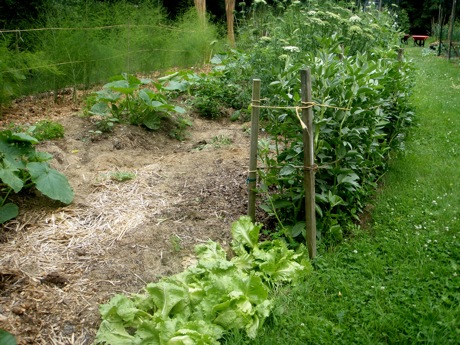
asparagus to the rear, mowed central path at the right. Actual distance between: @ 20 feet.
The plan: Early in spring, plant lettuce, fava beans and peas at the path edge of what will become the winter squash bed. By the time it’s warm enough to plant the squash, the peas will be flowering. By the time the squash flows lavalike over the edge of the bed, the early things will be all done.
Big question for today: will they be all done?
Read More…