Eric's Japanese snowflake holly, still a baby at this writing but already quite showy.
Our friend Eric continues to find places to plant new things, in this case a pair of Japanese Hollies that are almost (but not quite, I have to confess) sufficiently dazzling to make me change my mind about randomly variegated plants. But I’m a notorious holdout in this regard. Almost everyone else is bound to be seduced, if not by the picture then by Eric’s description of this plant’s merits, of which there are many besides its looks.
Read More…
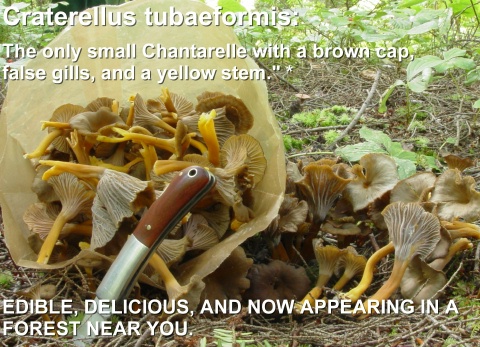
I probably should have titled this “Harvesting Wild Mushrooms;” there are all kinds of them just about everywhere (or at least everywhere in the Northeast). Our vegetable gardens may be soggy – even without Irene this has been a mighty rainy summer – but in the silver lining department there’s a bumper crop in the woods and fields.
Read More…
This started out to be about blue, and how plants that are far apart in most ways may be mighty similar in the color department.

That’s a sweet pea (legume family) on the left and a larkspur (buttercup family) on the right. The seeds are coriander and will be a new crop of cilantro by fall.
But then the larkspurs took over, because – at least in the north – they’re a real low fuss delight (unlike some flowers we could name). Larkspurs are so closely related to delphiniums they used to be in the same species, but this airy member of the family almost never needs staking.* Also unlike delphiniums, larkspurs are seldom bothered by slugs and snails. Plus they don’t dwindle and die out on you after a couple of years. Plant just once and have them forever.
Read More…
Would be me; thinking I could just make some of this classic English dessert, put up the recipe and move on to something gardenly like breeding peonies, growing great basil or one of the many other topics on the tip of my desktop.
However.
Reading up on gooseberry fool – don’t laugh; it turns out to be a much explored subject* – led me into a briar patch of nursery catalogs, from which I have only recently emerged.

Two ways of serving Gooseberry Fool.
Read More…

Their backs turned to us: no problem. Our backs turned to them: catastrophe!
At this point, most people are at least dimly aware that it ain’t about the honey. Honey bees (Apis mellifera) are essential to the commercial production of most fruits and vegetables and those bees are in deep, deep trouble.
Being a locavore helps, especially if the locality is your own back yard, but staying away from agribusiness produce isn’t going to fix the problem. Even crops grown on small farms and in gardens need pollinators, and in many respects the woes of (non-native) honeybees are also the woes of native bees (there are scores of species) and other native pollen transporters.
What to do?
Read More…
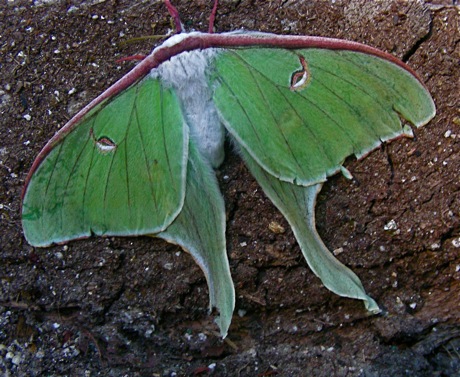
A Luna moth (Actias luna). Not the enemy, even though its children are very large and green.
I don’t have a picture of a hawkmoth, aka sphinx moth or hummingbird moth (so named for its ability to hover and its very long tongue). But if you see one of these gray-brown creatures, almost big enough to pass for a small bird, you’re seeing disaster on the wing. The Hawkmoth’s very large green children are hornworms.

Tomato – or more likely tobacco - hornworm (Manduca quinquemaculata or M. sexta), both voracious consumers of tomato, pepper, petunia, tobacco and other plants in the nightshade family.
In our New York and Maine gardens, hornworms usually show up in late July or August. But I’m thinking about them early this year because a Facebook friend in Virginia is already beset.
“Hornworms are eating my tomato plants,” she wrote, “anyone have advice on how to get rid of them?”
But of course!
Try the tips on Hornworm eradication at the end of this post, I replied, and if you get the chance, employ these two major organic defenses:
Read More…
After years and years of happy harvests, garden mainstays like heirloom tomatoes, squash blossoms and armloads of fresh herbs are as familiar as breathing, but every spring I get surprised all over again by the lettuces: how beautiful they are, how delicious, how willing…
And how different from the lettuce at the market, whether super or farmers.’ Being both extremely bulky and highly perishable, first class lettuce is a perfect poster child for home-grown.

Panisse (left) and Forellensclhuss – one modern, one heirloom. One toothsome, one super-tender. Neither suitable for any but the most local commercial cultivation.
It’s an ever-changing parade, with overlapping performers. First come the mild, mid-green frills of Black Seeded Simpson, dotted around in self-sown clumps, offspring of last year’s late summer’s crop. Then close behind them the classics of spring planting, including our favorite: buttery thick-leafed Webb’s Wonderful.

Self-sown Black Seeded Simpson, being permitted to stay in place beside the tomato patch. It grows so fast we ignore Rule # 1 and just cut the crowded seedlings by handfuls until we’ve used them up.
Read More…
or more accurately, me live on the radio, answering your questions about how to grow great food, whether you’ve got a big garden or not. Preparing the goodies after you’ve grown them (or snagged them at the Farmers’ Market) is also fair game.
Just tune in this very Tuesday (tomorrow!) at 2PM, to Martha Stewart Living Today on Sirius Satellite Radio. No subscription? No problem. There’s a 7 day free trial that will handily let you listen – and I hope participate.

Part of our Hudson Valley Vegetable (and fruit!) Garden - but yours doesn't need to be nearly this big to deliver big rewards.
If you’re anything like me, questions are already coming out of your ears – what, for instance, am I going to DO with all this lettuce ? – but if a bit of inspiration would help, try the roundup of food garden posts at Vegetable Gardening for Smarties, Not Dummies.
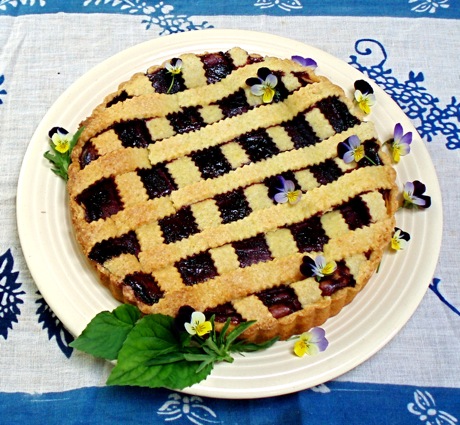
Almost Al’s Ricotta Tart (with puree from our own Kaga plums and a few Johnny Jump-ups because why not?)
Summer and winter – and spring and fall; this is a treat that knows no season – my friend Alex Tuller’s ricotta tart has been a go-to dessert ever since I had the first piece, back in 2006.
It’s easy, delicious, handsome, ideal for making ahead…and on top of that it’s infinitely variable, which is why I call it “Almost” Al’s tart. Good as it is in the original I usually wind up playing around with it.
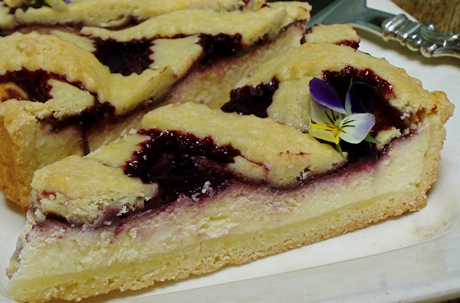
The plum puree is so intense only a very thin layer is needed. If using freshly cooked peaches, for instance, you might want it a little thicker
Read More…
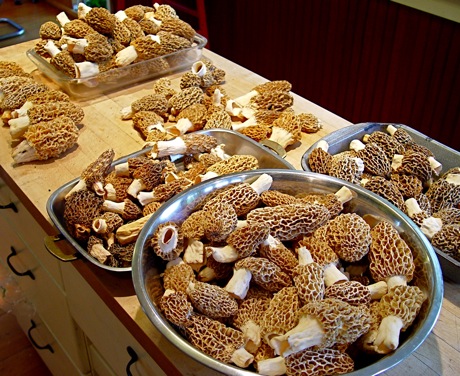
Not sure if I’m bragging or confessing; but either way we did pretty well morelling this year, at the expense of working on the new evergreen garden, up-potting the last batch of tomato seedlings, giving the raspberries their second weeding…
Morels Part 1: The All American Fried Morel Experiment

Read More…