Garden
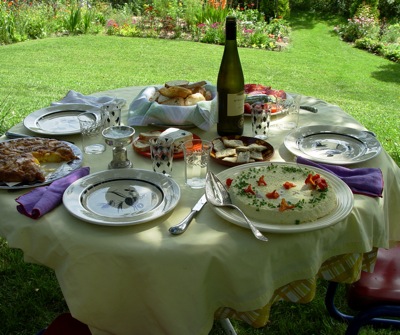
Just a little reminder it’s not going to be winter forever.
First, though, present time. Here’s my perennial shopping list ( with source links) of good gifts for gardeners.
Membership in The Garden Conservancy is on that list without further explanation and at this point none may be needed. But just for the record: after starting small and being exceedingly Northeast-centric, the Conservancy is now saving significant gardens all over the US and offering benefits almost everywhere. Just the ticket for garden-loving friends, regardless of skill level or actual possession of garden.
Read More…
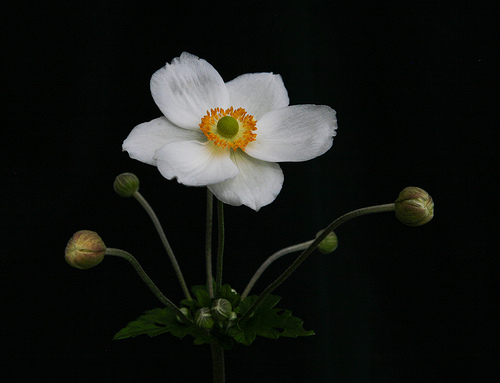
One of my favorites! For trouble-free late fall bloom on a plant that’s lovely all summer long, I’m with Eric in finding it among the best.
Read More…
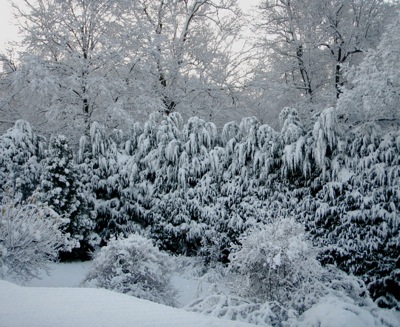
Last Saturday winter began in earnest: steel gray sky, cotton candy snow: very beautiful, very cold,
Then, after the mail came, very much time to be thinking about next year’s tomatoes.
Seed catalogs don’t wait for Christmas any more; they’ve been coming in for about a month. Now the pace is picking up and after last summer’s disastrous late blight, I’m looking through their offerings in a whole new way, because

In the summer of ’09, purely by accident, we had hybrid beefsteaks in the greenhouse.
They were the only tomatoes we got and although they weren’t as good as our favorite heirlooms they were better than anything we could buy locally, heirloom or hybrid.
Read More…
December 1st, 6:00 PM: The candied grapefruit rind is bubbling in the syrup, almost done, so I’m sort of stuck in the kitchen when I notice it’s cold outside in the clear still night under the fat moon. So of course I get nervous about the lettuce and my pet baby radicchios.
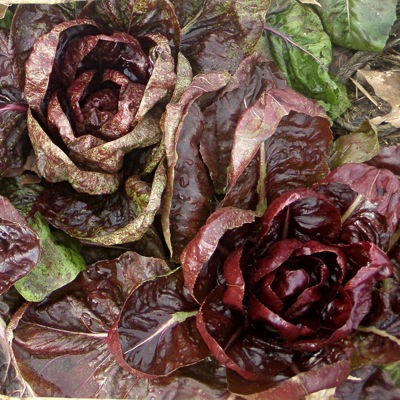
The radicchios are still making progress toward heading up; I continue to have hope
Decide to put covers back on even though plants are already at that frozen stage where you shouldn’t touch them if you want them to thaw unharmed. Wilted tips better than wilted everything being my thinking on that.
Turn off the grapefruit (recipe follows)
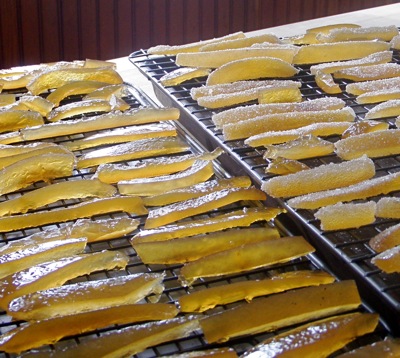
Home candied citrus rind is worlds better than store-bought. Also extremely easy to make and very nearly free.
Put on the headlamp, recruit Bill, who puts on his headlamp, and down we go to cover most but not all of what’s left.
Read More…
Over in Connecticut, our friend Eric at Yale’s Marsh Garden has lifted his eyes from his greenhouse’s travails and fastened them on the ginkgo trees. Herewith his overview of the ginkgo’s unique place in the plant kingdom, its fascinating history – and its worthiness in the garden.

Ginkgo biloba, a late-bloomer in the fall color department
Read More…
As we get ready to fire up for Thanksgiving, I’m reminded how lucky I am. Not many cooks have a huge wood-burning outdoor oven, but thanks to my loving ( and very handy) husband we have two, one in New York and one in Maine.
 Bill built the Maine oven so the process could be filmed, so in a way I can thank The Three Thousand Mile Garden for that one. But that one never would have happened if the New York one hadn’t came first, and although Bill did of course build it the ultimate thanks there should probably go to his childhood.
There were several outdoor bread ovens in the neighborhood where he grew up, including one at his grandmother’s place. He never forgot the bread – or the fact that the ovens were home built – so when I started making wistful noises about how nice it would be to have one they fell on receptive ears.
Next thing to be thankful for: he’s a man of action. And that goes not just for building the ovens but also for providing instructions. You too can have one of these things, not without a bit of work and not instantly, needless to say, but very very inexpensively and it ain’t rocket science, either. Here’s his step by step how-to:
Read More…
This week, my friend Eric over at Yale has his mind on disappearances: the original completion date for the new greenhouse, the promise of post-construction peace and more worryingly, several rare cactuses stolen by someone who obviously knew just what they were after. But thanks to a glitch he will describe ( and fortunately for us) he also found himself thinking about bananas.
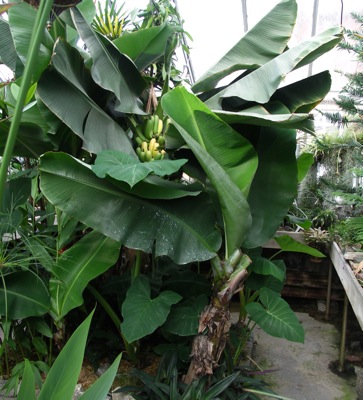
The banana at Marsh Garden
Read More…
This post is the debut of a new regular feature: Eric’s Pet Plants, written and photographed by my friend Eric Larson, manager of Marsh Botanic Garden at Yale University. This week, Eric extolls the persimmon, describing the differences between species and pointing out the tree’s many merits: It’s small, it’s not fussy about soils, it doesn’t require a lot of spraying — and the fruit it produces is delicious (if you know the freezing trick).

Student Intern Ben Ashcraft holds a small portion of the Marsh harvest. Most commercially available persimmons are larger, sometimes three to four inches across. But we like them small and tasty.
Read More…
The discussion about protecting the fig was resolved in favor of the trench method, so I went back and put in a few more details about how we actually did it. Just a few – right now the story is a report , not a recommendation.

- The bundled fig in its leaf-lined trench
The trunk is of course a bit springy and must be held down until the leaf pile is big enough to act as a weight. The holder here is Bill’s ever-handy Italian rototiller, still on site after being used to dig the trench.
One lettuce, actually, the delicious heirloom butterhead ‘Merveille des Quatre Saisons’.

lettuce 'Merveille des Quatre Saisons," popular since the 1880's
Where winter temperatures drop into the teens and below, it’s only merveille in 3 saisons, but that’s still pretty good. It’s one of the first to head up after a spring planting. It stays nicely flavorful in summer, even after it starts to bolt, and it’s really stellar in fall: tender, juicy, sweet, beautiful – and disinclined to rot, even when the autumn is unusually rainy.
Read More…